



The Pretty Big Pile – Interview mit Erik Rempen von Silk Softworks
Ich durfte mit Erik Rempen, Entwickler von THE PRETTY BIG PILE, sprechen und mit ihm über Träume, Meditation und seine Lieblingsspiele philosophieren.
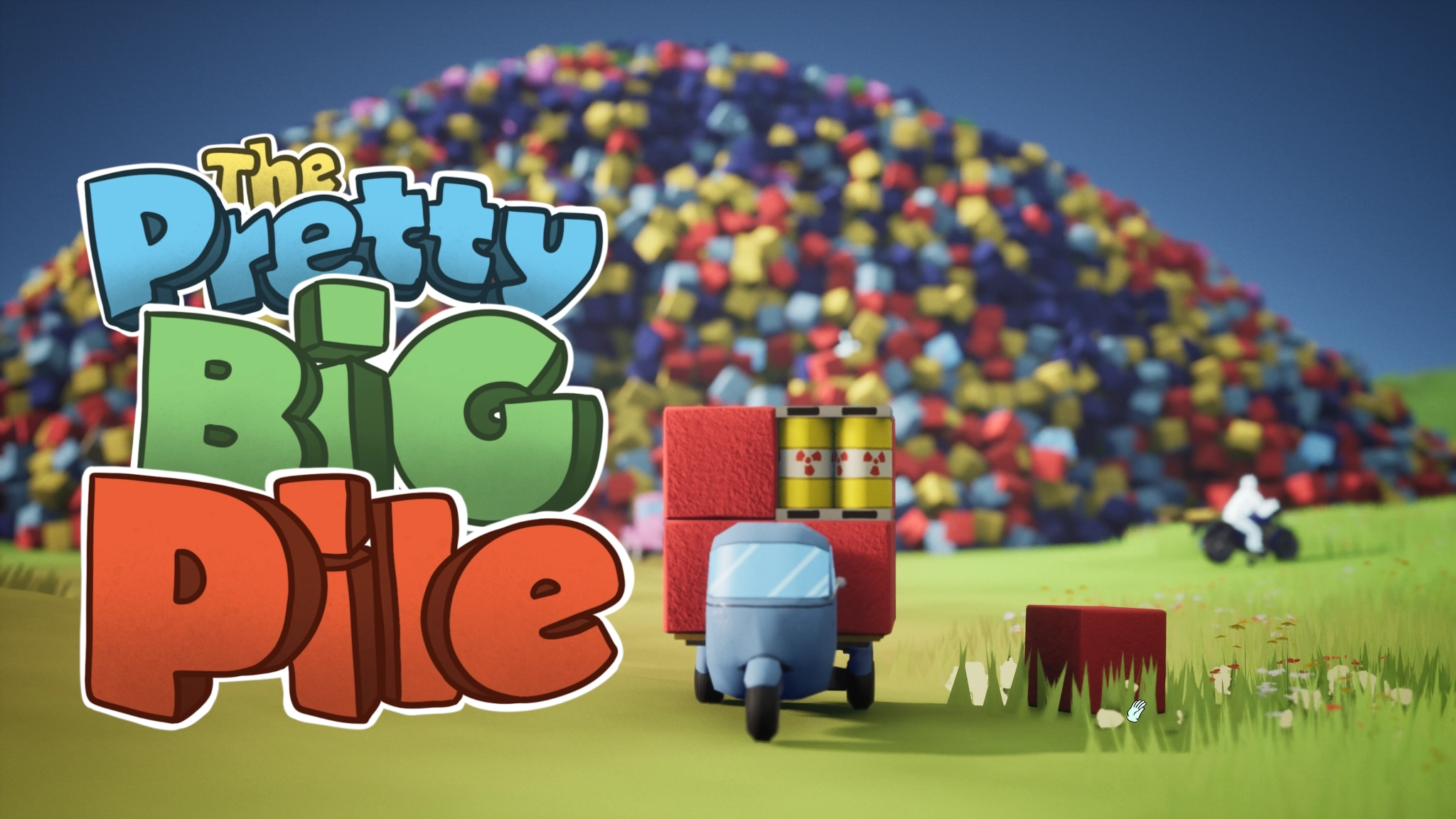
THE PRETTY BIG PILE ist ein ungewöhnliches Casual-Spiel des Solo-Entwicklers Erik Rempen, das am 11. November 2026 bei Silk Softworks auf Steam erschienen ist. Die Aufgabe: einen riesigen Haufen bunter Würfel nach Farbe in Lastwagen sortieren. Die Idee dazu kam Erik im Traum. Ich habe mit ihm über Meditation statt Grind, die Physik hinter tausenden Würfeln und das Leben als Solo-Entwickler gesprochen.
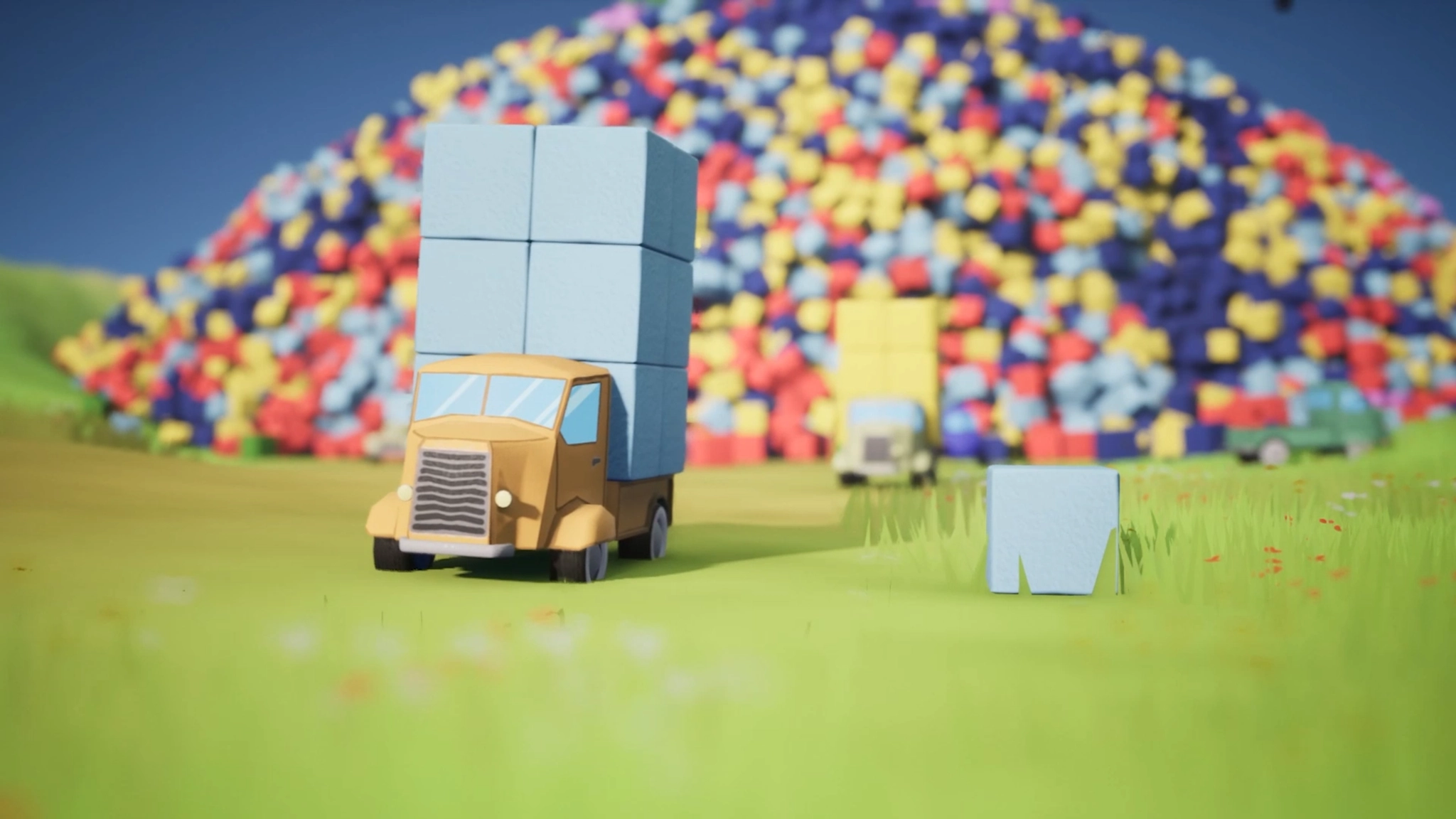
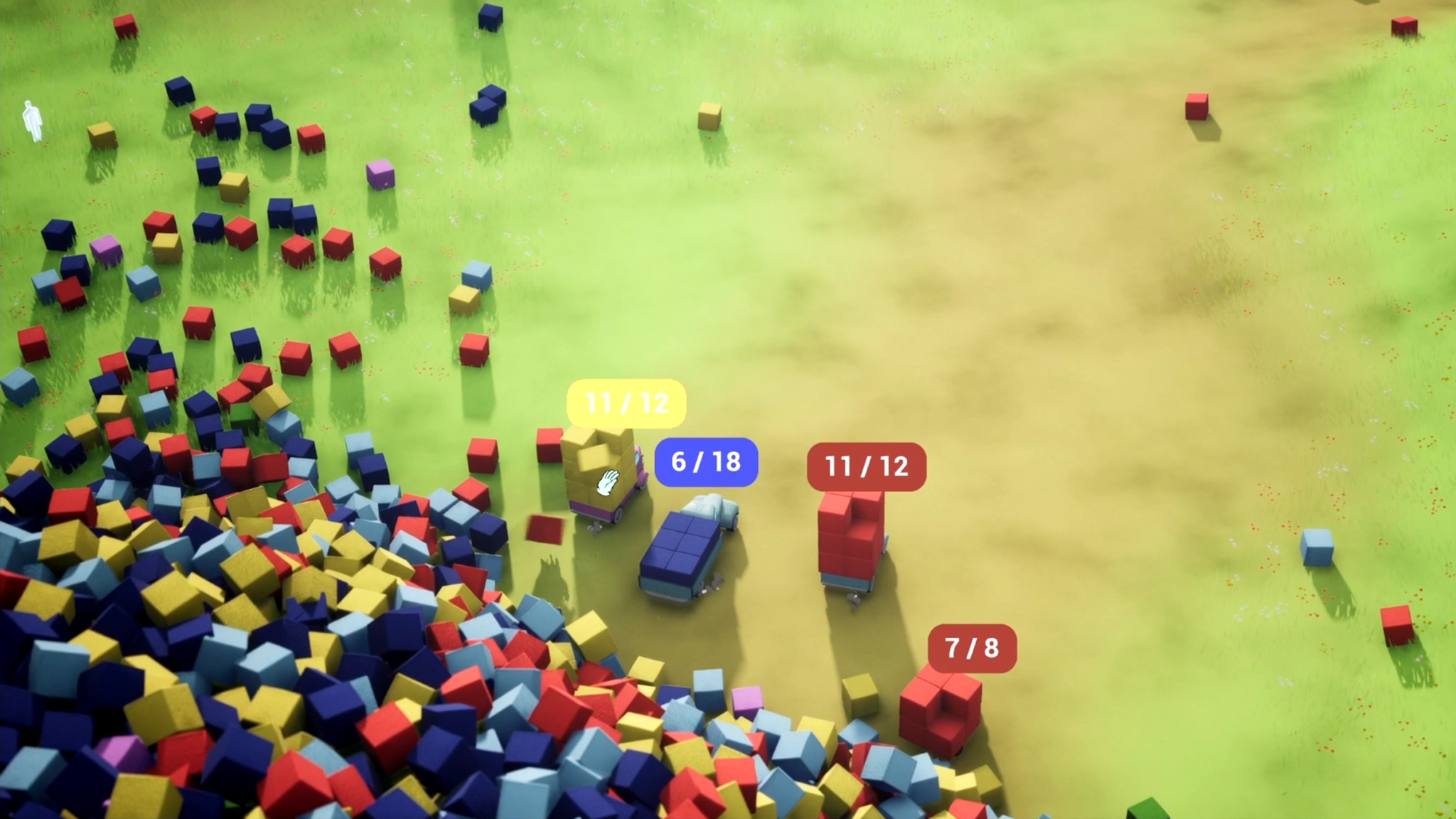
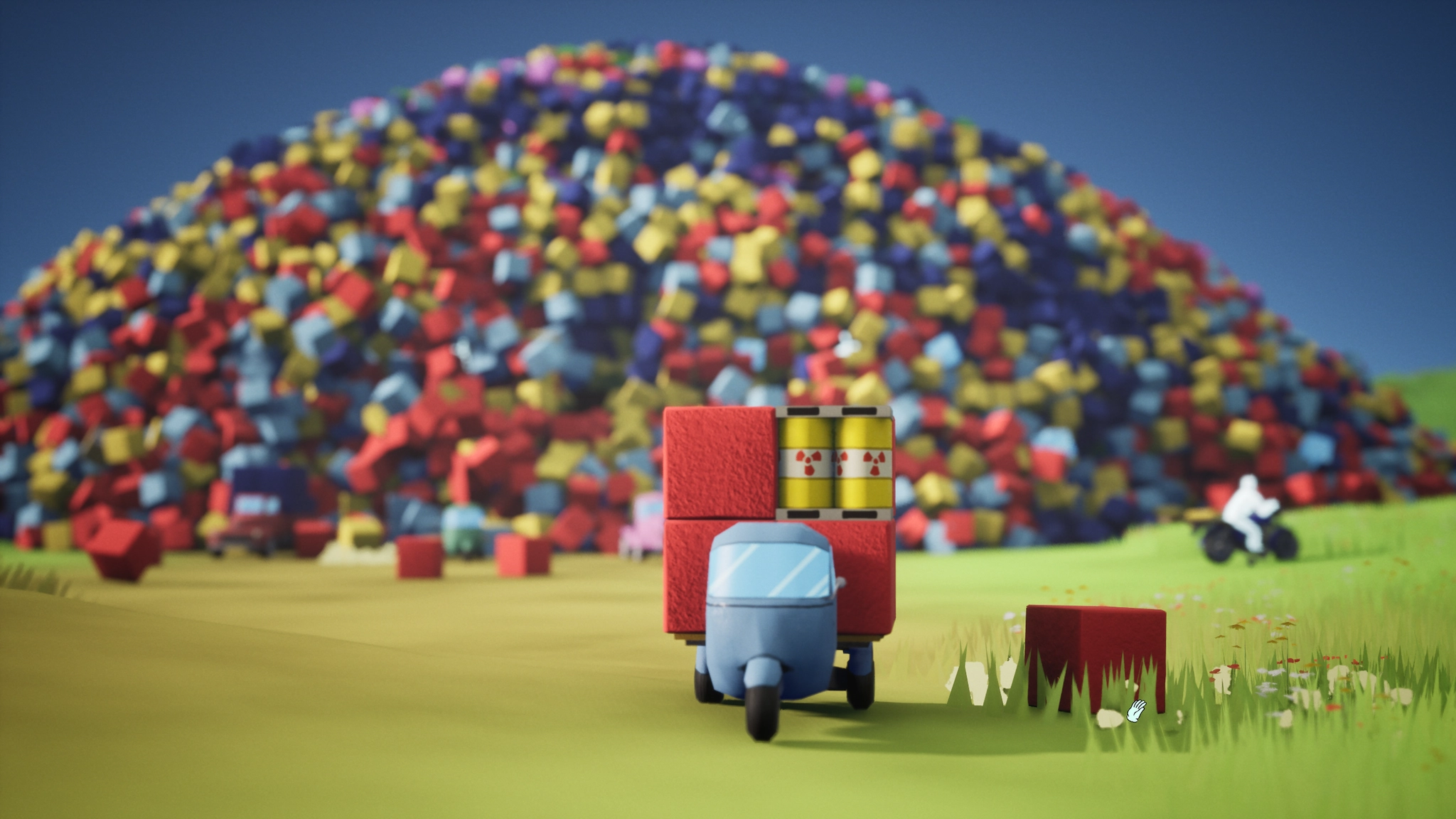
In The Pretty Big Pile, the player is presented with exactly that. Some soft green grass and a massive pile of cubes to sort by color into trucks of different sizes. Each truck only holds one color, when it's full, it'll be replaced by a new, empty truck. There are a LOT of cubes to sort. This scratches a organizational itch in the brain as your mind focuses on the local most abundant cube color, until that changes to another as slow, eventual progress is made.
This game is more of an exercise of patience and way to quiet your mind in this noisy world. The goal is not speed, efficiency, high score or even skill, this can be treated as a meditation to remind yourself of the purposelessness of life, and to find joy in the simplest of things. Like organizing cubes by color onto trucks. There may be some minor distractions buried amongst the cubes, but keep focused and keep sorting!
Das Interview wurde auf englisch geführt und anschließend übersetzt, die Originalversion findet ihr nach der deutschen Fassung.
spielgefluester.net: Auf deiner Steam-Seite steht, dass dir das Spiel im Traum eingefallen ist. Was genau hast du geträumt, und wann hast du beschlossen, daraus wirklich ein Spiel zu machen?
Erik: Ja, das stimmt wirklich! Ich habe geträumt, dass ich in einer endlosen grünen Graslandschaft gefangen war, in deren Mitte ein riesiger Haufen bunter Würfel lag. Meine Aufgabe war es, die Würfel nach Farbe auf alte Lastwagen zu verteilen, während mich geisterhafte Gestalten bei jedem Handgriff beobachteten, ohne ein Wort zu sagen. Als ich aufwachte, erinnerte ich mich an den Traum und dachte: „Das kann ich bauen.“ Noch am selben Tag habe ich angefangen. Ich habe dazu auch ein Devlog, das ich im Laufe der Woche hochladen werde: https://youtu.be/maB0xX7HDWI
spielgefluester.net: „Sortiere Würfel nach Farbe in Lastwagen. Das ist so ziemlich alles.“ War es schwer, der Versuchung zu widerstehen, mehr Features einzubauen, oder war genau diese Reduktion der Punkt?
Erik: Damit habe ich tatsächlich sehr gekämpft, und deshalb hat sich der Release sogar um sechs Monate verzögert. Ich war hin- und hergerissen, ob es nicht eine Art „Trick“ ist, ein kostenpflichtiges Spiel ohne eigentlichen Zweck zu veröffentlichen. Am Ende habe ich doch einige zusätzliche Gegenstände und Eigenheiten eingebaut, um den Unterhaltungswert zu erhöhen und an die ungewöhnliche Art der Spiele anzuknüpfen, die ich bei Silk Softworks mache. Ich hoffe, die Leute haben Spaß an den kleinen Dingen, die jetzt im Spiel stecken. :)
spielgefluester.net: Spieler sollen nach und nach freilegen, „was auch immer im Haufen steckt“. Ohne zu viel zu verraten: Worauf dürfen sich geduldige Spieler freuen?
Erik: Das Spiel wird so vermarktet, dass man eigentlich nichts unter dem Haufen erwarten sollte. Aber natürlich musste ich da IRGENDWAS hinpacken. Ich hoffe, es ist keine allzu große Enttäuschung, aber auch nicht so spannend, dass man unbedingt danach suchen muss. Schließlich geht es in diesem Spiel darum, dem Grind von Spielen zu entkommen, einfach zu entspannen und eine sich wiederholende Aufgabe als eine Art Meditation zu erledigen. Das Ziel sollte nicht der Sinn sein. Wer einen Berg besteigt, wird mit der Aussicht belohnt, aber was er eigentlich genießt, ist der Aufstieg: das Gefühl, etwas geschafft zu haben, und der Weg dorthin.
spielgefluester.net: Steam-Nutzer taggen das Spiel sowohl als „Entspannend“ als auch als „Satire“. Ist es ein gemütliches Erlebnis, ein Kommentar zu modernen „Satisfying“-Sortierspielen oder beides?
Erik: Es ist ein umgekehrter Kommentar zum „Die Zahlen müssen steigen“-Design aktueller Spiele wie Balatro, Vampire Survivors oder Ball x Pit. Ich wollte sehen, was passiert, wenn man das Spiel aus dem Gameplay herausnimmt und sich nur noch auf Schockwert und Meditation verlässt. Ist eine digitale Meditation möglich? Natürlich. Ist das hier schon der perfekte Weg dahin? Ich glaube, noch nicht ganz. Aber ich hoffe, dass jemand dieses Genre in eine Richtung weiterentwickelt, in der es nicht immer nur um das Maximieren eines Incremental Games geht.
spielgefluester.net: Wie hast du die Physik von so vielen Würfeln umgesetzt? Was waren die größten technischen Herausforderungen?
Erik: Das war eine wirklich spaßige Herausforderung. Im Grunde funktioniert es so: Alle Würfel im Haufen sind statische Instanzen, also eine Art „falsche“ Darstellung des Haufens. Wenn du auf einen Würfel klickst, wird er gelöscht und durch eines von 50 versteckten, gepoolten Physikobjekten ersetzt. Dabei werden auch ein paar der umliegenden Würfel „freigegeben“, damit der Effekt glaubwürdig wirkt. Sind alle 50 Physikwürfel im Einsatz, verschwinden sie nach und nach wieder und werden durch neue statische Instanzen des Haufens ersetzt. Ich hoffe, das ist verständlich, aber es hat wirklich Spaß gemacht, das zu lösen.
Die andere Herausforderung war die Berechnung, wie ein riesiger Würfelhaufen überhaupt aussieht. Im Prinzip sind es Reihe um Reihe immer weniger Würfel, die im Kreis angeordnet werden und so eine abfallende Kegelform ergeben. Es hat Spaß gemacht, diese Form zu entwickeln und sie effizient und sauber hinzubekommen. Auch das beschreibe ich im Devlog: https://youtu.be/maB0xX7HDWI
spielgefluester.net: Dein vorheriges Spiel, Kainga: Seeds of Civilization, war ein komplexes Roguelite-Dorfbauspiel. Was hast du daraus gelernt, und warum bist du diesmal so radikal klein geblieben?
Erik: Ich habe außerdem ShantyTown entwickelt, das dieses Jahr erschienen ist, ein gemütliches Städtebauspiel. Ich habe also zwei Aufbauspiele und dieses ungewöhnliche Würfelspiel gemacht. Ich entwickle Spiele, die ich selbst spielen möchte und die ich interessant finde, und feile dann so lange daran, wie ich kann, um ein unvergessliches Erlebnis zu schaffen. ShantyTown und Kainga sind beide sehr beliebt und sehr gut bewertet, und ich bin sehr stolz auf sie. Diesmal war es nur ein seltsamer Traum, aber ich wollte trotzdem sicherstellen, dass das Spiel dem Standard der anderen Silk-Softworks-Spiele gerecht wird.
spielgefluester.net: Du entwickelst allein. Wie sieht ein typischer Arbeitstag bei dir aus, und wie bleibst du motiviert?
Erik: Als Solo-Entwickler hat man unglaublich viel zu tun, und meine Motivation kommt in Wellen. Meistens sind es ein paar Monate solider Arbeit und dann ein Monat, in dem die Qualität wegen fehlender Motivation und Burnout stark nachlässt. Ich habe gelernt, dass es dann am besten ist, ganz aufzuhören, oder es zumindest zu versuchen. Mein Kopf arbeitet ja trotzdem weiter, und während der Pause sammeln sich Aufgaben und Ideen an. Wenn ich dann wieder einsteige, habe ich eine spannende Liste im Kopf, die ich angehen will. Meine letzte Pause war eine dreiwöchige Wanderung durch Japan, und das war wirklich unglaublich erholsam. Allerdings habe ich auch einen Vollzeitjob, was das Ganze neben Entwicklung und Marketing etwas schwieriger macht.
spielgefluester.net: Das Spiel ist erst vor wenigen Tagen erschienen. Wie war die Resonanz bisher, und hat dich etwas am Feedback der Spieler überrascht?
Erik: Der Launch war ruhiger als erwartet, aber das Feedback war besser als erwartet. Ich hätte nicht gedacht, dass die Leute so viel Freude daran haben. Tatsächlich waren es Freunde und Familie, denen ich das Spiel gezeigt hatte, die mich überredet haben, es zu veröffentlichen, weil sie mit der simplen Idee so viel Spaß hatten.
spielgefluester.net: Welche Spiele oder auch Dinge außerhalb des Gamings haben The Pretty Big Pile geprägt?
Erik: The Pretty Big Pile ist ein Kommentar zum Alltag, zum sinnlosen Grind von Arbeit und dem Leben selbst. Wir erledigen ständig Probleme und Aufgaben mit einem übersteigerten Gefühl von Erfolg, nur um kurz danach wieder zu vergessen, was wir getan haben. Genau wie beim Sortieren der Würfel: Du konzentrierst dich auf die roten, weil sie gerade in der Überzahl sind, aber sobald ein Lastwagen voll ist, verpufft das Erfolgsgefühl sofort.
Ich habe das Spiel im Juni/Juli dieses Jahres entwickelt und kurz danach einige KI-generierte Spiele aus demselben Genre gesehen, etwa A Needle in a Haystack, Sort them Ducks oder Dinobones. Ich habe den Release zurückgehalten, weil ich befürchtete, dass mein kleines Projekt in einen Topf mit den KI-Spielen geworfen wird. Das ist trotzdem passiert, und ich glaube, das lässt sich nicht vermeiden. Trotzdem freue ich mich, dass zumindest ein paar Leute Spaß an dieser ungewöhnlichen Idee haben.
spielgefluester.net: Sind Updates für den Haufen geplant, und wartet schon ein neuer Traum darauf, dein nächstes Spiel zu werden?
Erik: Für ShantyTown ist ein DLC in Arbeit, außerdem eine Portierung für die Switch 2. Und ich arbeite am Fundament für ein größeres Projekt, das ich SEHR gerne ankündigen werde, sobald die Zeit reif ist.
spielgefluester.net: Was sind deine aktuellen Lieblingsspiele, und was sind deine All-Time-Favoriten?
Erik: Gute Frage! Zuletzt habe ich Queens Domain gespielt, ein Retro-Adventure. Meine absoluten Lieblingsspiele sind Populous: The Beginning, Morrowind, Factorio, RimWorld und einige neue Klassiker wie Baldur's Gate 3.
spielgefluester.net: Vielen Dank für deine Zeit und das spannende Interview, Erik!
spielgefluester.net: Your Steam page says the game came to you in a dream. What exactly did you dream, and at what point did you decide to actually turn it into a game?
Erik: Yes, it's true! I had a dream I was trapped in an endless green grassy world, with a massive pile of colored cubes in the middle. I was tasked with sorting which cubes go onto which antique truck by color, while ghostly figures watched my every move but didn't say anything. When I woke up, I remembered the dream and thought, "I can make that," so I started making it that day. I have a devlog about the experience that I'll upload sometime this week: https://youtu.be/maB0xX7HDWI
spielgefluester.net: "Sort cubes by color into trucks. That's pretty much all there is." Was it hard to resist adding more features, or was keeping it this minimal the whole point?
Erik: I actually struggled with this a lot, and it caused the game to not be launched for six months. I kept going back and forth on whether it was a "trick" to launch a paid game that had no purpose. In the end, I DID add quite a few other items and quirks to keep the entertainment value and connect with the unusual nature of the games I make at Silk Softworks. I hope people enjoy the little things now in the game :)
spielgefluester.net: Players are invited to slowly uncover "whatever lies within the pile." Without spoiling too much, what can patient players look forward to?
Erik: The game is marketed in a way that players should not expect anything beneath the pile, but of course I had to add SOMETHING under there. So I hope what I've added is not that big of a disappointment, but also not so exciting that it must be sought. After all, the purpose of this game is to remove yourself from the game grind and just relax and do a repetitive task as a sort of meditation. The destination shouldn't be the purpose here. Climbing a mountain rewards the climber with a view, but it's the climb that they enjoy: the satisfaction of accomplishment and the process along the way.
spielgefluester.net: Steam users tag the game as both "Relaxing" and "Satire." Is it a cozy experience, a commentary on modern "satisfying" sorting games, or both?
Erik: It's a reverse commentary on the "numbers-must-go-up" design ethos of recent games like Balatro, Vampire Survivors, Ball x Pit, etc. I wanted to see what would happen if we removed the game from gameplay and just went off the scale of shock value and meditation. Can a digital meditation be possible? Of course. Is this the perfect method of that? I don't think quite yet, but I hope someone else takes this genre in a direction that isn't always about maximizing an incremental game.
spielgefluester.net: How did you handle the physics of so many cubes? What were the biggest technical challenges?
Erik: It was a really fun challenge to solve. Basically, the way it works is this: all the cubes in the pile are static instances, a kind of "fake" representation of the pile. When you click on a cube, it is deleted and replaced with one of 50 hidden, pooled physics objects. It also "releases" a few of the surrounding cubes to sell the effect. When all 50 physics cubes have been used, they begin removing themselves and are replaced with new static instances of the pile. I hope that makes sense, but it was a really fun challenge to solve.
The other challenge was the actual calculation of what a giant pile of cubes looks like. It's basically rows and rows of exponentially decreasing numbers of cubes placed in a circle to create a sloping cone shape. It was fun to come up with that shape and figure out how to make it efficient and smooth. This process is described in the devlog as well: https://youtu.be/maB0xX7HDWI
spielgefluester.net: Your previous game, Kainga: Seeds of Civilization, was a complex roguelite village-building game. What did you learn from it, and why go so radically small this time?
Erik: Actually, I also created ShantyTown, which came out this year, a cozy urban building game. So I have two building games and this unusual cube game. I create games that I want to play and that I think would be interesting, then I cook them as much as I can to create a memorable experience. Both ShantyTown and Kainga are very popular, very highly reviewed games, and I'm very proud of them. This time, it was just a weird dream I had, but I still wanted to make sure the experience was up to the standard of Silk Softworks' other games.
spielgefluester.net: You develop on your own. What does a typical working day look like, and how do you stay motivated?
Erik: There is a lot a solo developer has to do, and motivation comes in waves for me: usually a few months of solid work and then one month of very poor-quality work due to lack of motivation and burnout. I've learned that at this time it's best to just stop working altogether, or at least try. My brain is still working, and tasks and ideas pile up while I'm taking a break, so when I jump back in, I have an exciting mental list of stuff I want to tackle. The last break I had was a three-week hike in Japan, and it was really, really rejuvenating. However, I also work a full-time job, so this is a bit more difficult to manage on top of my regular development and marketing work.
spielgefluester.net: The game launched only a few days ago. How has the reception been so far, and has anything in the player feedback surprised you?
Erik: The launch was quieter than I expected, but the feedback has been better than I expected. I didn't think people would find that much enjoyment in it, but it was actually friends and family I showed the game to who talked me into launching it publicly, as they had such a good time with the very simple idea.
spielgefluester.net: Which games, or other things outside of gaming, shaped The Pretty Big Pile?
Erik: The Pretty Big Pile is a commentary on everyday life, the meaningless grind of work and life itself. We constantly tackle problems and tasks with a self-inflated sense of accomplishment, only to forget what we've done just moments after it happens. Just like sorting the cubes: you focus on red cubes because that's the local majority, but once a truck is full, the satisfaction or sense of accomplishment immediately dissipates.
I first created this game in June/July of this year and soon after saw quite a few AI-generated games of the same genre: A Needle in a Haystack, Sort them Ducks, Dinobones, etc. I held off on launching the game for fear that this little project would be lumped into the pile of AI creations. That has happened anyway, and I think it's unavoidable. Regardless, I'm happy there are at least a few people enjoying this unusual idea.
spielgefluester.net: Are there updates planned for the pile, and is there already a new dream waiting to become your next game?
Erik: There's a DLC for ShantyTown in the works, as well as a Switch 2 port of that game. I'm also working on the foundation for a larger project that I am VERY excited to announce when the time is right.
spielgefluester.net: What are your current favorite games, and what are your all-time favorites?
Erik: Good question! Recently I've been playing Queens Domain, the retro adventure game. My all-time favorite games are Populous: The Beginning, Morrowind, Factorio, RimWorld and some new classics like Baldur's Gate 3.
spielgefluester.net: Thank you so much for your time and this great interview, Erik!

Kommentare